An Essential Guide to Rubbish Disposal in Japan
Welcome to Japan! The famously clean streets are maintained by a highly detailed, community-enforced system of waste separation. Understanding the rules is a fundamental act of respect that all residents and visitors are expected to master.
Why the Bins Disappeared (The Cultural Context)
The notable scarcity of public rubbish bins is intentional, rooted in history and culture:
Security Measures: Bins were largely removed from public spaces, especially train stations, following the 1995 Sarin gas attack to prevent concealment of dangerous items.
Meticulous Sorting: Japan’s detailed separation system is designed for sorting to happen at home or at the point of purchase, rather than at centralized public points.
Personal Responsibility: There is a deep cultural expectation (mottainai) that individuals carry their own waste until they can dispose of it correctly at their home or accommodation.
Rules for Foreign Residents: Separation is Mandatory
As a resident, you must follow the precise rules set by your local city (shi) or ward (ku). Your rubbish will be rejected if you fail to comply with the category, time, or bag requirements.
Rubbish Bag Requirements (By Location)
| Location Type | Bag Rule | Key Requirement |
| Tokyo's 23 Wards (Ku) | NO official designated bags are typically required. | Use any transparent or semi-transparent bag bought at a supermarket. Opaque bags (e.g., black) are forbidden. |
| Other Cities/Districts | YES, designated bags are often required. | You must purchase official, colour-coded or stamped bags from konbini or supermarkets specific to your municipality. |
Waste Separation and Preparation Details
| Category (Japanese) | Description & Preparation Details | Collection (Typical) |
| Burnable (可燃ごみ Kanen Gomi) | Kitchen scraps, soiled paper, wood, clothing, rubber, leather, non-recyclable plastics. | Twice a week |
| Preparation: Drain all liquid from food waste. Oil must be solidified or absorbed into cloth/newspaper. | ||
| Non-Burnable (不燃ごみ Funen Gomi) | Metals, glass, ceramics, small appliances (under 30cm), dry-cell batteries, lightbulbs. | 1–2 times a month |
| Preparation: Rinse containers. Wrap sharp items (glass/knives) in paper and label clearly with "キケン" (Kiken - Danger). Spray cans/lighters must be completely empty. | ||
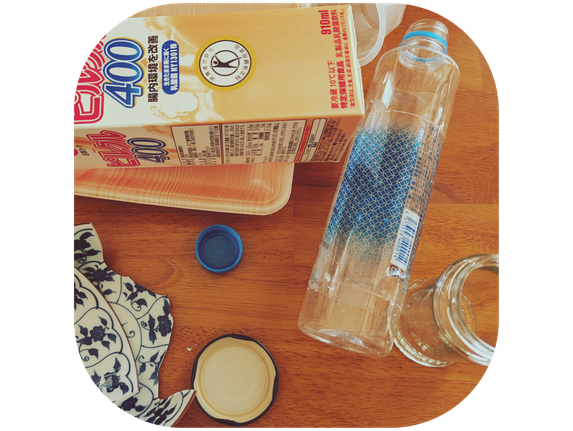
| Recyclables (資源ごみ Shigen Gomi) | PET bottles, cans, glass bottles, paper, cardboard. | Once a week |
| Preparation: Must be clean and dry. For PET bottles, remove cap and label, rinse, and crush. Paper/cardboard must be flattened and tied with string. |
The Process for Bulky Waste (Sodai Gomi)
Bulky Waste refers to items exceeding 30cm (or sometimes 50cm) on any side (e.g., furniture, futons).
Apply: Contact your local Sodai Gomi Reception Center (phone or online) to register the item and receive a fee quote and collection date.
Pay: Purchase the official Sodai Gomi fee sticker/ticket from a konbini or post office for the quoted amount.
Label & Dispose: Write your name and collection number on the sticker, affix it to the item, and place it at the designated spot by 8:00 AM on the scheduled date.
Home Appliance Exception: TVs, refrigerators, air conditioners, washing machines/dryers, and PCs are covered by separate recycling laws and cannot be disposed of as Sodai Gomi. They must be collected by a retailer or manufacturer for a fee.

Recommendations for Tourists: Practical Etiquette
For short-term visitors, the rules focus on respecting the environment and the limits of public disposal points.
Carry Your Rubbish: This is the most important rule. Always keep a small plastic bag in your pocket or backpack for any wrappers or tissues you create. Take all accumulated waste back to your accommodation.
Use Bins at the Source ONLY:
- Convenience Stores (Konbini): Bins are strictly for rubbish from items purchased at that specific store.
- Vending Machines: Recycling bins are for bottles/cans purchased from that specific machine only.
Handling the Single Hotel Rubbish Bin: If your hotel room provides only one rubbish bin, it is handled by a commercial waste service. To be considerate of the staff:
- Place general rubbish (wrappers, tissues, etc.) in the bin.
- Rinse and clean all recyclables (PET bottles, cans).
- Leave these clean recyclables neatly separated next to the bin. The staff will collect and sort them for proper commercial disposal.
By observing these guidelines, you contribute directly to maintaining Japan's renowned cleanliness and harmony.